
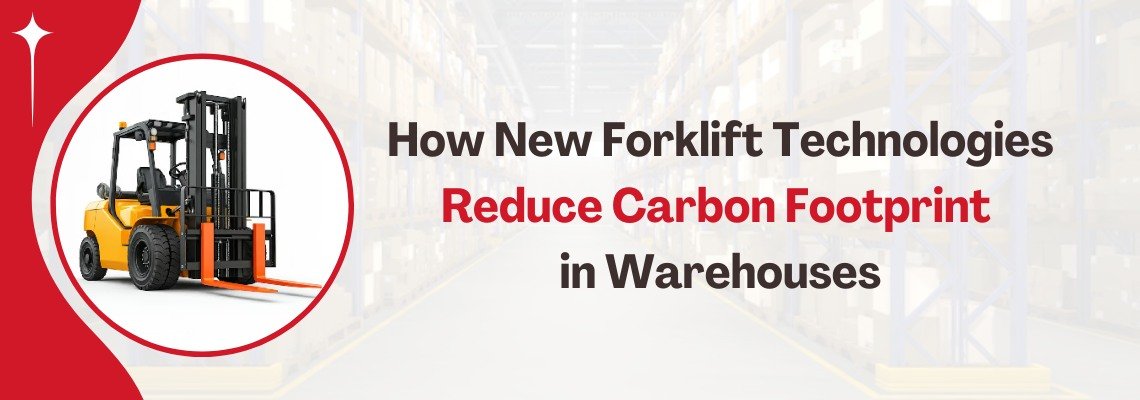
Warehouse managers, Indian industries, and sustainability officers need to drive operational efficiency while reducing emissions. Forklift technologies reduce carbon footprint, innovations like electric powertrains and smart systems that reduce fuel consumption and waste. These innovations make the heavy handling of materials operational processes more efficient and help achieve India’s sustainability goals without compromise on speed and reliability. Modern forklifts make warehouses cleaner and more competitive.
The Carbon Challenge of Traditional Warehouses
Diesel and LPG forklifts burn fossil fuels and release CO2 and other greenhouse gas pollutants. These emissions can add up quickly in warehouses that operate at high capacity. Any fleet of forklifts that runs on fossil fuels can emit tons of pollution and greenhouse gas emissions, work of the regulations and ESG targets. Progressive technology that integrates zero emission alternatives and lifts the operational capacity of the material handling system will significantly reduce the carbon footprint from the first day.
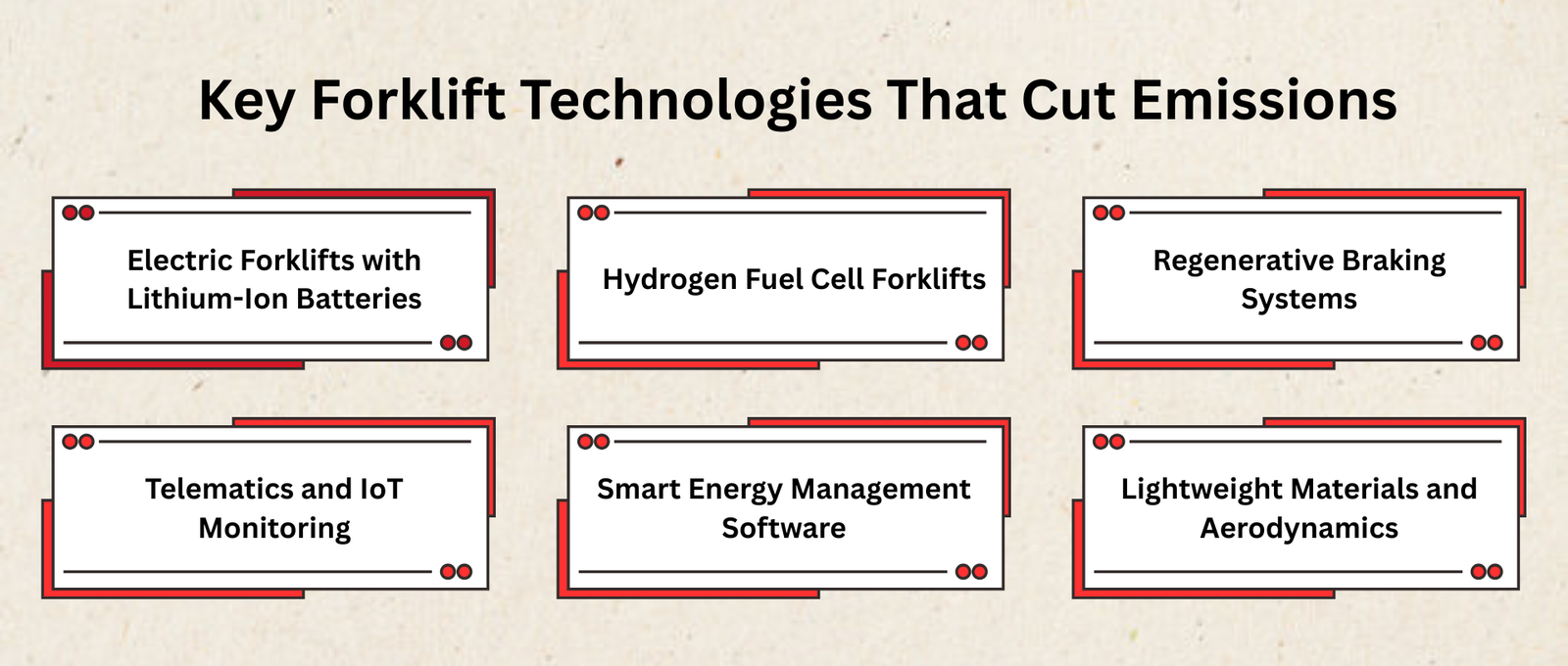
Key Forklift Technologies That Cut Emissions
-
Electric Forklifts with Lithium-Ion Batteries
Diesel powered forklifts can be replaced with battery powered forklifts that operate without any emissions during use. They are charged using the power grid or solar energy and consume 60% less power on every lift. Quick charging during meal breaks keeps the truck moving all shift.
-
Hydrogen Fuel Cell Forklifts
Like gas powered forklifts, hydrogen fuel cell forklifts can be refueled in minutes. They are ideal for 24/7 operations, are comparable to diesel powered forklifts in performance, and are pollution free.
-
Regenerative Braking Systems
When a vehicle slows down, energy is captured and stored into batteries. This retrofits around 20-30% of the power and increases overall efficiency by allowing the vehicle to operate for a longer duration by decreasing the need for recharging.
-
Telematics and IoT Monitoring
Enabling spacecraft data to be monitored in real-time allows for tracking of idle time, route, and load, and subsequently fuel burnt. This can be utilized to create a framework that allows for the customization of fuel-efficient travel paths. This provides a means of energy waste prevention.
-
Smart Energy Management Software
Predictive energy management systems schedule energy consumption to off peak hours in an attempt to lessen the load on an energy grid by utilizing renewable energy sources.
-
Lightweight Materials and Aerodynamics
The carbon fibre that is used to fabricate the frames and the cabs is used to create a cabin that is 15% lighter, decreasing the amount of energy required to travel.
-
Autonomous and AGV Forklifts
Self-driving automated guided vehicles streamline travel paths in an attempt to eliminate inefficient detours and work zone areas.
-
Real Impact on Your Carbon Footprint
The switch from a diesel fuel-based to an electric fleet of over ten forklifts reduces CO2 emissions by up to 50 tons every year. Telematics increases this percentage by 20%. Many warehouses in India noted an emissions compliance within their facilities (40% lower energy bill).
Benefits beyond the Environment
- Cost Saving: Reduce spend on fuel and maintenance by 30-50% as compared to diesel.
- Regulatory Compliance: Achieve BS-VI standards emissions and gain global green certification.
- Worker Health: Diminished sick days due to cleaner emissions.
- Rapid ROI: Investment recovery in energy efficiency over a 2-3 year realm.
Steps to Greening Your Fleet
- Assess usage patterns, and current emissions.
- For an entire section, run a pilot program utilizing an electric or hydrogen fuel-based design.
- Teach staff how to use new technology.
- After implementation, further collaborate with solar charging for a complete zero impact.
Addressing Common Concerns
If upfront costs are a concern, there are benefits from subsidies like FAME-II. There is no need to worry about range. Lithium batteries provide use over a complete shift. No need to worry about infrastructure. Modular chargers provide easy scalable solutions.
Embracing forklift technology that reduces the carbon footprint sustains leadership position to your warehouse. Get in touch with Forklift Dealers in Coimbatore for demos, financing, and setups suited to the Warehouse conditions.